Libraries
Introduction
- A dynamic-link library (DLL or .so) is a module that contains functions and data
- Applications (processes) can use the functions and data in the code
- This is the most common way code is distributed.
- Up until this point you have only ever distributed code in an executable (exe)
Dynamic Libraries
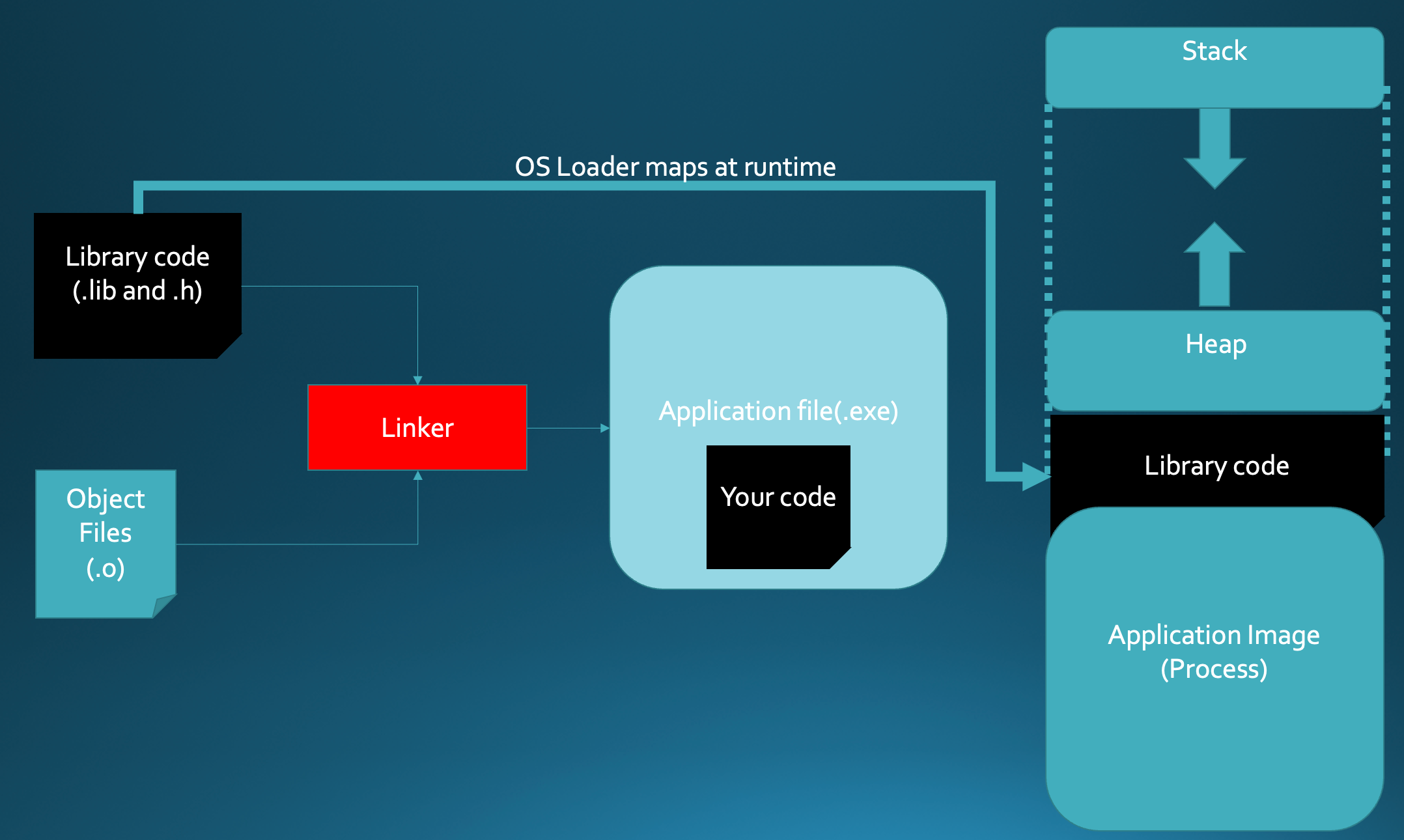
- During compile time the linker stubs out calls to the .dll or .so
- The actual implementation is not added into the image that is saved to disk
- The library is mapped into your application's address space at run time
Load-time dynamic linking
Your code makes explicit calls to exported DLL functions as if they were local functions.
Run-time dynamic linking
Functions are loaded with library functions such as LoadLibrary or LoadLibraryEx (Win32) or dlopen/dlsym (POSIX). These are not system calls. They are library code that runs in user space and makes system calls like openat and mmap to do the work.
#include <dlfcn.h>
#include <stdio.h>

void *handle = dlopen("libm.so.6", RTLD_LAZY);
double (*cos_fn)(double) = dlsym(handle, "cos");
printf("%f\n", cos_fn(3.14));
dlclose(handle);
Advantages of Dynamic Linking
- Multiple processes that load the same library share a single copy of its code in memory (on Windows, only when the DLL loads at the same base address)
- When you update a DLL, the applications that use it do not need to be recompiled
- Programs written in different programming languages can call the same DLL functions
Disadvantages of Dynamic Linking
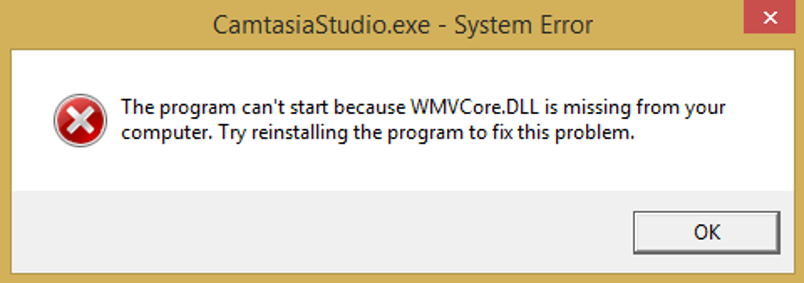
Loading
Static Libraries
- Similar to dynamic libraries
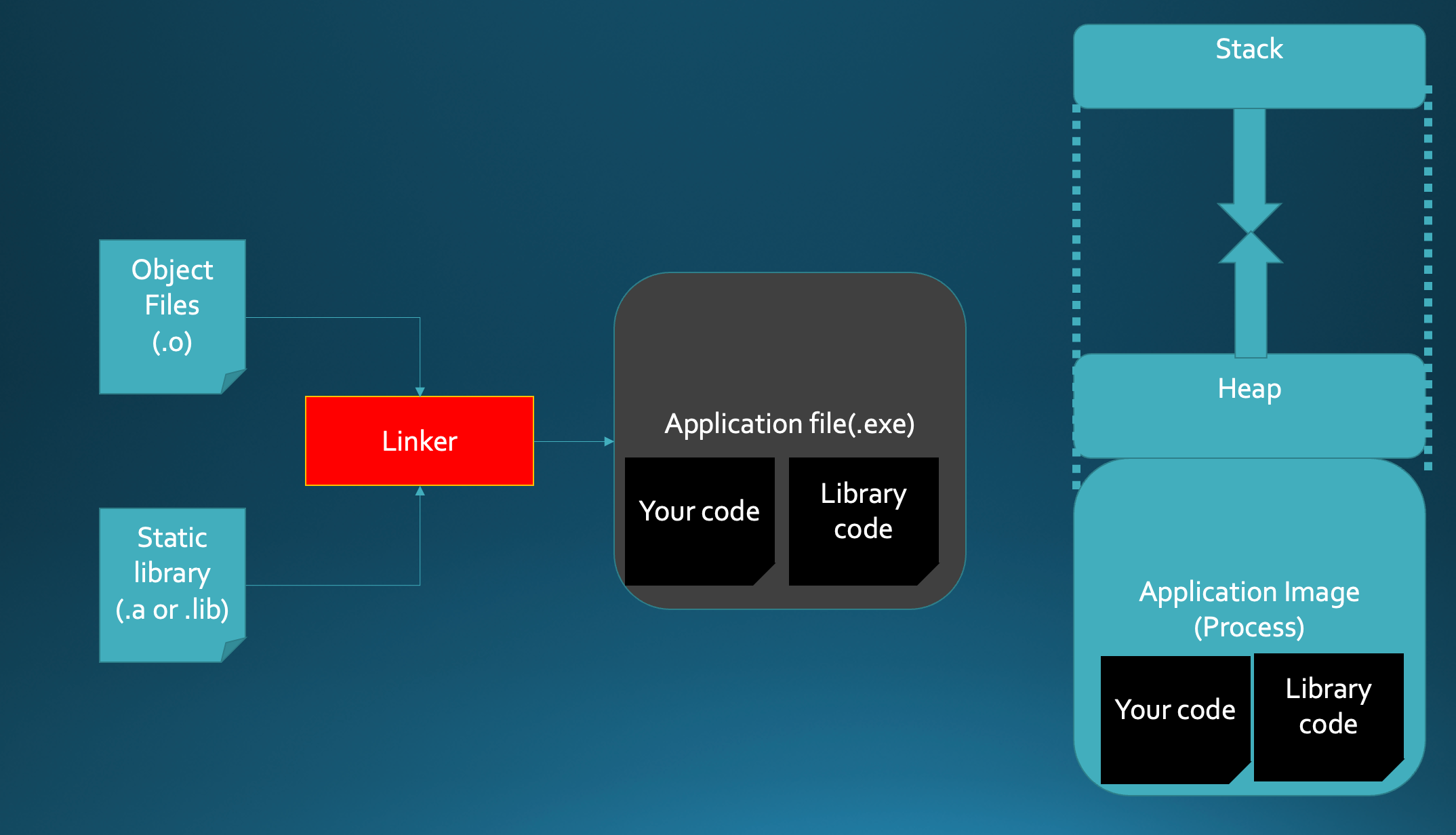
- Code is added into your application at compile time instead of runtime. The library becomes part of the image saved on disk
- Your application will not have any dependencies that need to be resolved at runtime
Advantages of Static Linking
- All your code is contained in one file (your exe or lib)
- Easier to ship to a customer
- Could be more secure because you know exactly what you are loading
- Eliminates any issues with missing libraries on the host system
Disadvantages of Static Linking
- Your program is bigger, and no other program can share its copy of the library code
- If there is a security flaw in your linked code you will still be using the old version
- If library code gets faster or adds support for new hardware, you are stuck on the old version
Dependency Types
Implicit Dependency
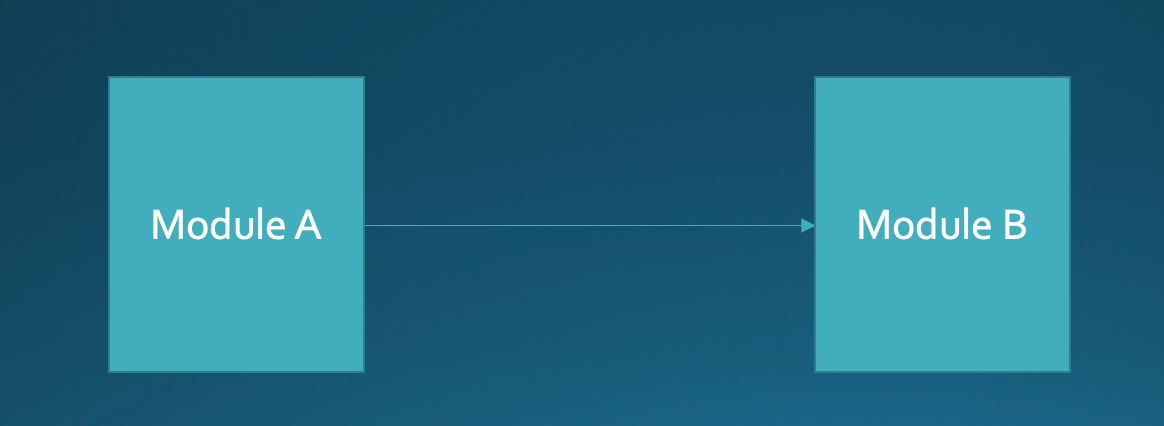
Module A is implicitly linked with Module B at compile/link time
Explicit Dependency
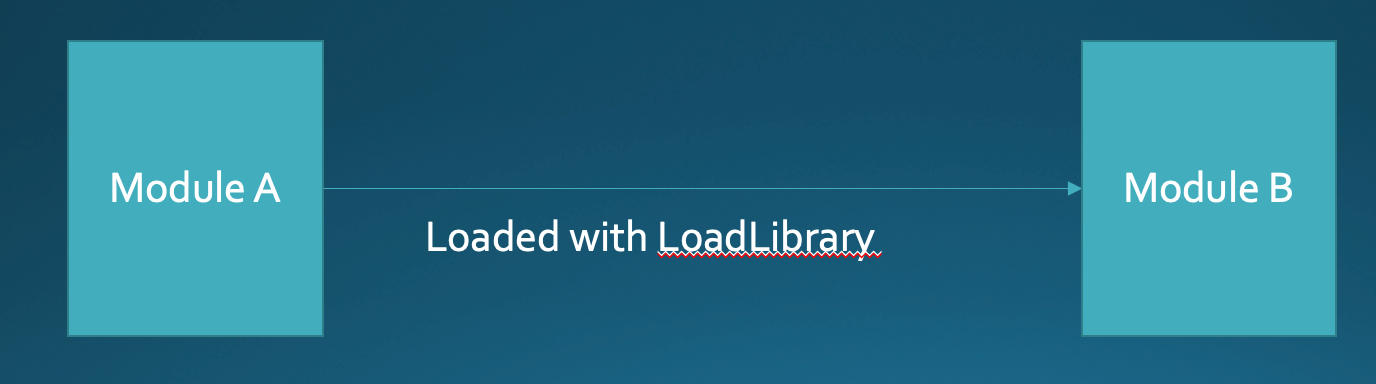
Module A is not linked with Module B at compile/link time. At runtime, Module A dynamically loads Module B via a LoadLibrary-type function (dlopen on Linux)
Forward Dependency
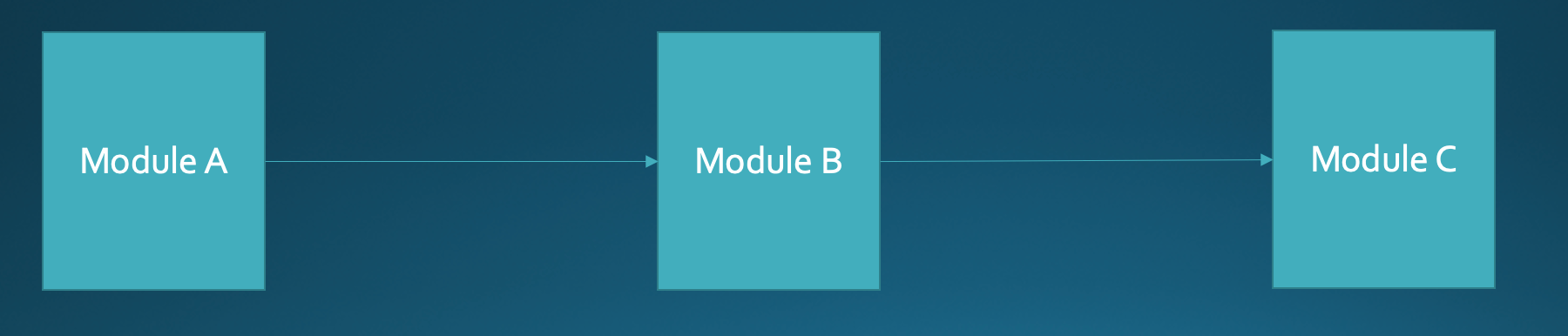
Module A is linked with a LIB file for Module B at compile/link time, and Module A's source code actually calls one or more functions in Module B. One of the functions called in Module B is actually a forwarded function call to Module C
Practical Linux Tools
These tools help you inspect libraries and binaries on Linux.
ldd - list dynamic dependencies
$ ldd /bin/ls
    linux-vdso.so.1 (0x00007ffd...)
    libselinux.so.1 => /lib/x86_64-linux-gnu/libselinux.so.1
    libc.so.6 => /lib/x86_64-linux-gnu/libc.so.6
ldd prints every shared library a binary depends on and where the dynamic linker found it. If a dependency is missing you see "not found", which is the root cause of most "works on my machine" failures.
nm - list symbols in an object file
$ nm -D /lib/x86_64-linux-gnu/libm.so.6 | grep " cos@"
0000000000033e10 W cos@@GLIBC_2.2.5
nm shows the symbol table. T means the symbol is defined in the text (code) section, W means it is a weak symbol (glibc exports cos as a weak alias), and U means it is undefined (required from another library). Use the real file libm.so.6, because libm.so on a modern glibc system is a small linker script that points at it.
objdump - disassemble and inspect binaries
$ objdump -d my_program | head -40   # disassemble
$ objdump -p my_program              # show dynamic section / needed libs
LD_PRELOAD - inject a library at runtime
LD_PRELOAD lets you load a custom shared library before any other, overriding symbols from the standard library. This is useful for debugging and testing:
# Replace malloc/free with a custom implementation for one run
LD_PRELOAD=./mymalloc.so ./my_program
This is how many memory profilers and leak checkers intercept library calls like malloc without recompiling the target program. strace works differently: it uses the ptrace system call to stop the program every time it makes a system call.
ldconfig - rebuild the shared library cache
sudo ldconfig          # rebuild /etc/ld.so.cache
ldconfig -p | grep ssl # search the cache
When you install a new .so file into a directory such as /usr/local/lib, the dynamic linker will not find it until you run ldconfig. It scans the directories listed in /etc/ld.so.conf, creates the soname symlinks, and rebuilds the cache that maps library names to file paths. For a library in your own build directory, set LD_LIBRARY_PATH instead: LD_LIBRARY_PATH=. ./my_program.