Operating Systems Introduction
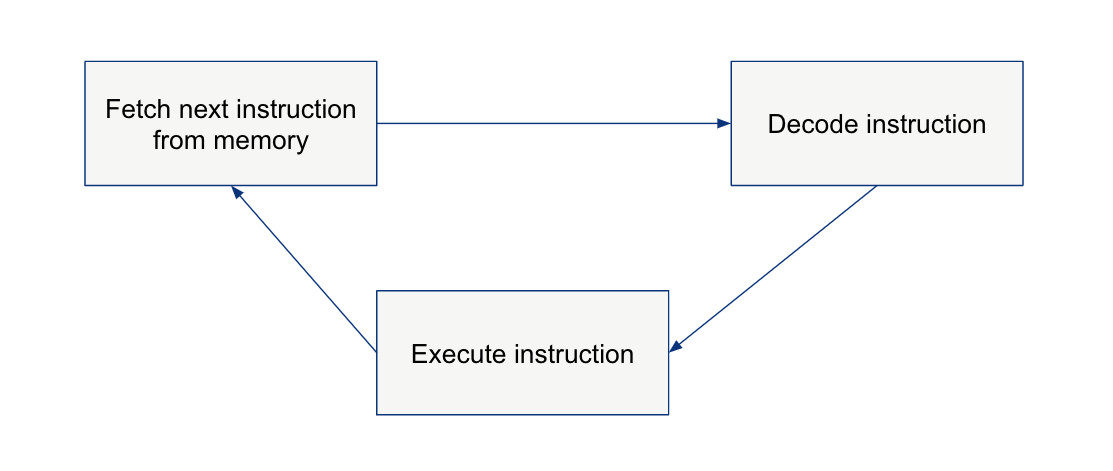
The Von Neumann Model
The OS
virtualization - The OS takes a physical resource (such as the processor, or memory, or a disk) and transforms it into a more general, powerful, and easy-to-use virtual form of itself
Virtualization
- Virtualizing The CPU
- Virtualizing Memory
Concurrency
- Multiple processes
- Multiple threads within a process
Persistence
- Saving data to disk
- The filesystem
- Files
- Directories
Design Goals
- Provide a set of abstractions in order to make the system convenient and easy to use.
- Provide high performance
- Minimize overheads
- Protection and security
- Energy efficiency
Some History
- Early Operating Systems: Just Libraries
- Beyond Libraries: Protection
- The Era of Multiprogramming
The Modern Era
Hardware support and protection and well-defined boundaries.
Kernel Space
- All machine instructions are available.
- All memory addresses are available.
User Space
- A subset of the instructions are available. Typically I/O instructions and instructions that change the mode bit are not available. Using those instructions causes the process to fault and stop.
- A subset of the memory addresses are available.